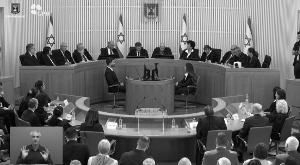
The Contribution of the Jurisprudence of the Supreme Court to the Protection of Social Rights, in Judicial Independence
Cornerstone of Democracy 66 (Shimon Shetreet & Hiram E. Chodosh eds., 2024)
Introduction
The contribution of the jurisprudence of the Supreme Court to the protection of social rights has many faces. Every day, a wide range of proceedings relating, in one degree or another, to social rights come before the Supreme Court. Unfortunately, social rights are not explicitly enumerated and anchored in the Basic Laws of Israel, and they lack a regulated and comprehensive legislative framework, as they should have.
The recognition of social rights currently exists within the framework of maintaining human dignity, this by virtue of Basic Law: Human Dignity and Liberty. The Israeli Supreme Court, sitting as the High Court of Justice (hcj), recognized the right to a minimum human existence with dignity, and dignified economic existence. The same goes for safeguarding the rights of those whose freedom has been denied, and more.
There is a general agreement on the centrality of the role of the Supreme Court, both as an appeals court and in its capacity as a High Court of Justice, in the protection of social rights, their design and promotion.
The social rights deal with various aspects of human wellbeing. These rights are designed to ensure that the basic needs of life, which are intended to allow a person to take advantage of the opportunities that life presents to him, will be guaranteed to him by the society in which he lives. Some of these rights have a direct or indirect effect on a person’s income level and economic welfare. They include the rights to health care and education, to work, to raise a family, to live with dignity, to social welfare, social security, nutritional security and adequate living conditions. The social rights are recognized under the International Covenant on Economic, Social and Cultural Rights and under the Universal Declaration of Human Rights. International standards of human rights have also included the right to environmental quality as a constitutional right.
There is a school of thought that civil-political rights are ‘superior’ to the social and economic rights because of the necessity of the former for the very existence of a democratic framework. This approach sees social rights as lesser rights. The civil and political rights are individual rights in nature; they refer to a private individual, the single person, whose rights we wish to protect. In this way, these rights correspond with liberal thinking that refers to the individual person. The social rights are of a more general nature. The concern for the existence of a social right affects a broader system. Thus, the realization of the right to education requires an education system that is not directed to the individual but to the general public.
A Basic Law: Social Rights, was scheduled to be brought to a second and third reading at the Knesset, but the Labour Party refrained from voting due to the upcoming elections in view of the opposition of the religious parties.